Contents
- Quick verdict: neither precursor is a proven anti-aging winner
- NR and NMN reach the same system through different entry points
- What human trials actually show
- Does NMN absorb better because it is closer to NAD+?
- Safety and U.S. regulatory context deserve equal weight
- Compare the bottle before comparing the acronym
- Which option fits different buyer goals?
- Where Advanced Mitochondrial Formula fits, and where it does not
- Bottom line
- Frequently asked questions
Quick verdict: neither precursor is a proven anti-aging winner
NR and NMN are closely related NAD+ precursors, and short human trials suggest that oral versions of both can raise at least some NAD-related blood measures. That does not establish that either one reliably improves energy, slows aging, or produces a meaningful benefit for every healthy adult. There is also no strong head-to-head human trial showing that an equivalent NR product beats an equivalent NMN product, or vice versa.
NR currently has a somewhat simpler choice architecture for a cautious U.S. buyer: it has a longer commercial history, multiple human trials, and branded forms that may be easier to trace to published research. NMN also has randomized human studies, including trials that measured insulin sensitivity, walking speed, sleep, and blood NAD markers, but the findings come from different populations and do not form a universal benefit claim. Choose by the exact product, evidence match, batch testing, regulatory context, and total monthly cost rather than by which acronym sounds closer to NAD+.
Affiliate disclosure: MitoEnergy Reviews may earn a commission from the clearly marked Advanced Mitochondrial Formula link in this guide. That product is neither an NR nor an NMN supplement. It appears only as a separate broad mitochondrial-support option, and the comparison below remains independent of that relationship.
NR vs NMN at a glance
| Decision point | NR | NMN |
|---|---|---|
| Full name | Nicotinamide riboside | Nicotinamide mononucleotide |
| Biological role | A vitamin B3-related precursor that can enter NAD+ salvage pathways. | A phosphorylated precursor one step closer to NAD+ in simplified pathway diagrams. |
| Human evidence | Several small trials show changes in NAD-related biomarkers; practical outcomes are inconsistent and population-specific. | Several small trials show changes in NAD-related biomarkers and selected outcomes; results are mixed and population-specific. |
| Head-to-head verdict | No established clinical superiority over NMN. | No established clinical superiority over NR. |
| Best buyer advantage | Research-linked branded ingredients and a relatively established supplement pathway can be easier to verify. | A growing trial base and direct consumer interest, when identity and batch purity are well documented. |
| Main caution | A rise in a biomarker is not proof of more energy or slower aging. | Product identity, storage, regulatory context, and claims require careful verification. |
The shortest practical answer
- Choose NR when you value a more established U.S. supplement history and can match the bottle to a studied ingredient form.
- Consider NMN only when the seller provides a clear dose, lot-specific identity and purity results, sensible storage guidance, and current regulatory information.
- Choose neither if you are trying to self-treat unexplained fatigue, a diagnosed condition, or a medication side effect.
- Do not pay a liposomal, sublingual, or proprietary-delivery premium unless the finished product has relevant comparative evidence.
- Run a one-product, time-limited experiment only after a clinician confirms that the ingredient and dose make sense for you.
NR and NMN reach the same system through different entry points
NAD+ is a coenzyme used in redox reactions, cellular energy metabolism, DNA-repair signaling, and other processes. The body continually makes, uses, and recycles it. NR and NMN are not stimulants and do not act like caffeine. They are raw materials that cells may process through NAD-related pathways.
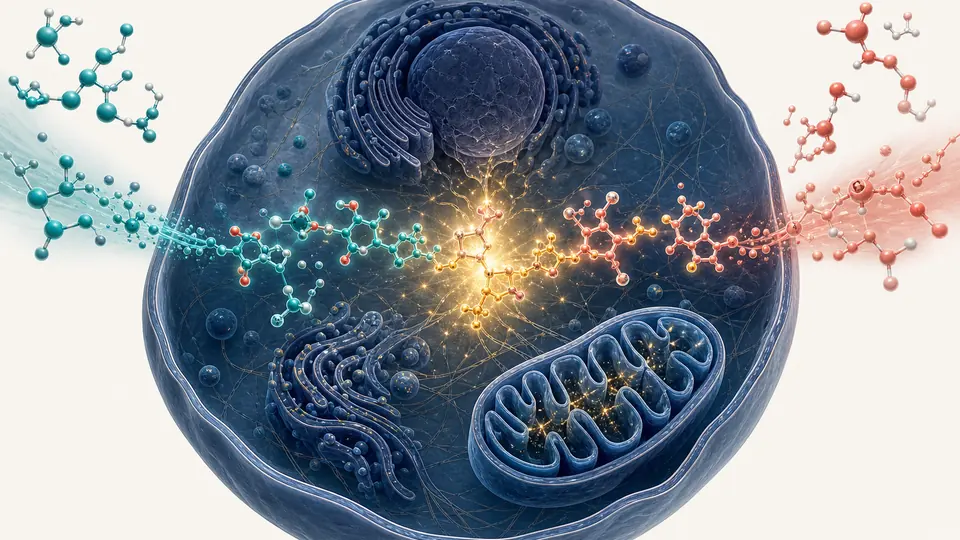
In a simplified salvage pathway, NR is phosphorylated to form NMN, and NMN is then converted to NAD+. That sequence makes NMN look like the obvious shortcut on a diagram, but oral absorption and tissue delivery are more complicated than the number of arrows. Digestion, enzymes, transporters, the gut microbiome, tissue demand, dose, and formulation all affect what ultimately reaches blood and cells.
What the pathway can and cannot tell you
| Pathway observation | Reasonable interpretation | Overreach to avoid |
|---|---|---|
| NR can be converted to NMN | NR is a biologically plausible NAD+ precursor. | Every NR bottle improves energy or healthy aging. |
| NMN sits immediately before NAD+ in a simplified pathway | NMN is a biologically plausible NAD+ precursor. | NMN must work faster or better than NR in people. |
| Blood NAD-related markers can rise after supplementation | The ingredient reached and changed at least part of the measured system. | The user will feel a benefit or experience a longer healthspan. |
| Animal studies show mechanistic effects | The mechanism may justify careful human research. | The same dose, outcome, or safety profile applies to humans. |
What human trials actually show
The most defensible shared conclusion is modest: both NR and NMN can alter NAD-related biomarkers in some study settings, and both have generally been tolerated in short trials. The evidence becomes less consistent when the question changes from can it raise a marker to will it improve a symptom or health outcome that matters to me.
A 2018 randomized crossover trial of NR in healthy middle-aged and older adults reported that six weeks of 500 mg twice daily was well tolerated and increased NAD+ metabolism measures. Exploratory cardiovascular findings were not a license to treat blood pressure, and later NR trials in other populations have not produced one uniform clinical story. A 2024 trial in older adults with mild cognitive impairment, for example, found that NR increased blood NAD+ but did not improve cognition over the study period.
For NMN, a 2021 randomized trial in 25 postmenopausal women with prediabetes found improved skeletal-muscle insulin sensitivity after 10 weeks at 250 mg daily, while several other measured outcomes did not change. Trials in older adults have reported selected changes in sleep, walking, or physical-performance measures, but designs, doses, timing, participant characteristics, and endpoints differ. These are signals to investigate, not proof that an NMN capsule is an anti-aging treatment.
How to compare the evidence without fooling yourself
| Evidence question | NR | NMN | Buyer takeaway |
|---|---|---|---|
| Can oral use change NAD-related markers? | Yes, in multiple short human trials. | Yes, in multiple short human trials. | Biological activity is plausible for both. |
| Are practical benefits consistent? | No; outcomes vary by trial and population. | No; outcomes vary by trial and population. | Do not buy on biomarker language alone. |
| Is long-term healthy-aging benefit established? | No. | No. | Avoid products promising age reversal or guaranteed longevity. |
| Has one beaten the other head to head? | Not in a robust clinical comparison that settles the buyer question. | Not in a robust clinical comparison that settles the buyer question. | Cross-trial effect sizes are not a fair ranking. |
| Can a trial validate a retail bottle? | Only when ingredient identity, formulation, dose, and quality meaningfully match. | Only when ingredient identity, formulation, dose, and quality meaningfully match. | Trace the exact ingredient, not just the acronym. |
Four traps in NR vs NMN claims
- Comparing percentages from separate studies as though the participants, labs, doses, and endpoints were identical.
- Turning a blood biomarker change into a promise about muscle, brain, fatigue, or lifespan.
- Using one favorable secondary endpoint while ignoring outcomes that did not change.
- Assuming a branded trial validates every generic, liposomal, delayed-release, powder, or sublingual version.
Does NMN absorb better because it is closer to NAD+?
Not as a general consumer conclusion. Molecule diagrams do not reveal how much intact ingredient survives a finished product, what happens in the digestive tract, which metabolites appear in blood, or which tissues use them. Scientists continue to study how oral NMN is dephosphorylated, transported, and metabolized. NR also undergoes conversion before contributing to the NAD pool.
This is why claims such as direct absorption, maximum bioavailability, and bypasses digestion need product-specific evidence. If a seller says its form is three, five, or ten times better, ask what was compared, whether doses were matched, whether the study tested the finished retail formulation in humans, and whether the endpoint was merely a short-term blood measurement.
Format premiums that require proof
- Liposomal: ask for particle characterization, stability data, and a relevant human comparison of the finished formula.
- Sublingual: ask whether the product has actual mucosal-delivery data rather than instructions alone.
- Delayed release: ask what problem the coating solves and whether that changes a meaningful human endpoint.
- Powder: check serving accuracy, moisture protection, storage, and whether a scoop can deliver the labeled amount consistently.
- Proprietary blend: reject any comparison that hides the amount of NR or NMN.
Safety and U.S. regulatory context deserve equal weight
Short trials do not reveal every risk of continuous use over years. Reported tolerability in a study also applies to its defined participants, dose, duration, and product, not automatically to people with complex medical histories or to multi-ingredient stacks. Stop and seek medical advice for a serious or unexpected reaction.
Ask a qualified clinician before using either precursor if you are pregnant or breastfeeding, take prescription medicines, are preparing for surgery, have kidney or liver disease, have a current or past cancer diagnosis, or are managing a metabolic, cardiovascular, neurologic, or other chronic condition. New, persistent, severe, or unexplained fatigue deserves evaluation before an NAD supplement experiment.
In the United States, retail availability does not prove that FDA reviewed a supplement for effectiveness. In September 2025, FDA reconsidered its earlier drug-preclusion interpretation and concluded that beta-NMN was not excluded from the dietary supplement definition after evidence of earlier supplement marketing. That resolved an important category question, but it did not make ordinary NMN supplements FDA-approved or certify any bottle's purity, safety, or effectiveness. Check the current FDA ingredient directory and recent agency communications rather than relying on an old seller FAQ. NR buyers should make the same basic verification: a familiar ingredient name is not proof that a particular brand is compliant or accurately labeled.
Safety questions to settle before checkout
| Question | Why it matters |
|---|---|
| What exact ingredient and amount will I take? | NR, NMN, niacinamide, NADH, and blends are not interchangeable, and total exposure can hide across products. |
| Does my medication or diagnosis change the decision? | Trial populations often exclude the people most likely to have interaction or monitoring concerns. |
| Am I stacking multiple NAD or mitochondrial products? | Overlap makes reactions harder to identify and may duplicate B3-related or antioxidant ingredients. |
| Is there a stop rule? | A time-limited plan with defined outcomes is safer than indefinite use based on hope. |
| Is the product currently lawful and accurately represented? | Market listings can outlast changes in agency interpretation, formulation, or seller responsibility. |
Compare the bottle before comparing the acronym
A careful NR vs NMN purchase comparison starts with two matched facts: the disclosed amount per daily serving and the evidence that the lot contains what the label says. Bottle price, capsule count, a front-label milligram number, and a generic tested badge can all mislead when serving sizes or blend amounts differ.
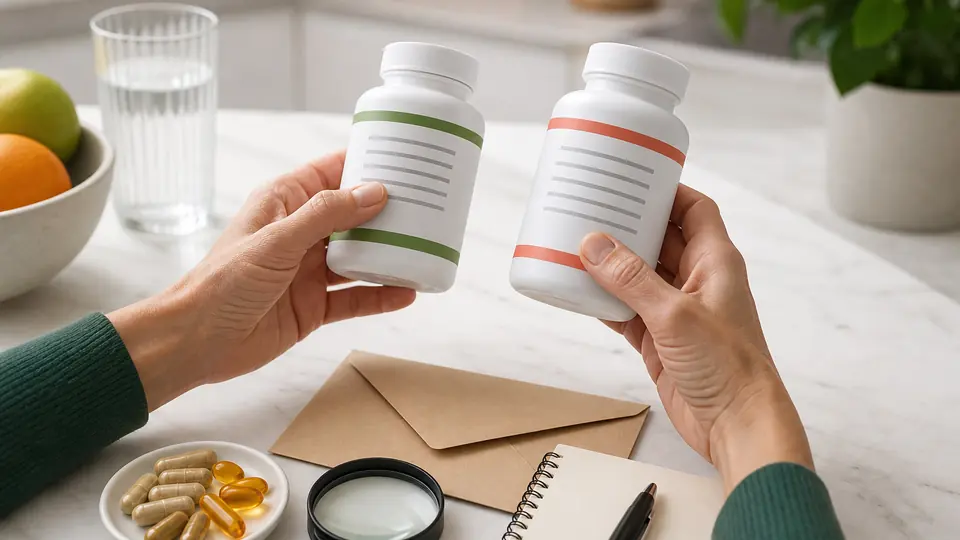
NR and NMN label checklist
| Check | What good evidence looks like | Red flag |
|---|---|---|
| Active identity | The full ingredient name and form are stated clearly. | NAD booster blend with no NR or NMN identity. |
| Amount | Milligrams per serving and servings per container are unambiguous. | A large front-label number that refers to a blend or the whole bottle. |
| Certificate of analysis | The lot number matches and the report covers identity, potency, and relevant contaminants. | An undated sample certificate, internal badge, or report for another lot. |
| Research match | The seller explains whether its ingredient form and dose correspond to cited human work. | Animal research or a competitor's trial presented as product proof. |
| Storage | Temperature, moisture, light, seal, and expiration guidance are specific. | Stability claims with no storage instructions. |
| Claims | Qualified support language that separates biomarkers from outcomes. | Reverse aging, repair disease, replace sleep, or guaranteed energy. |
| Value | Cost per disclosed daily amount, shipping, subscription, and refund terms are visible. | Only a discounted bottle price or countdown timer is emphasized. |
Simple cost math
- Monthly cost equals daily serving cost multiplied by the number of days you actually plan to use it.
- Compare like with like: the same daily amount, number of servings, shipping assumptions, and subscription status.
- Do not assign extra value to a patented or branded ingredient unless traceability or relevant research is documented.
- A cheaper unverified bottle is not necessarily better value; an expensive verified bottle is not necessarily clinically effective.
Which option fits different buyer goals?
A cautious scenario-based decision guide
| Your priority | Most logical next step | Why |
|---|---|---|
| A targeted NAD+ precursor with easier research traceability | Start by evaluating a clearly identified NR product. | Some branded NR forms can be matched more directly to published human studies. |
| Specific interest in NMN research | Evaluate a plain, clearly dosed NMN product with lot-specific testing and current regulatory documentation. | It keeps the experiment interpretable and avoids paying for unsupported delivery claims. |
| Unexplained low energy | Pause supplement shopping and seek a clinical evaluation. | Sleep problems, anemia, thyroid issues, medication effects, depression, infection, and other causes need different responses. |
| Broad mitochondrial ingredient coverage | Compare a multi-ingredient mitochondrial formula separately. | That is a different strategy from testing one NAD+ precursor. |
| Lowest-cost nutrition foundation | Review diet, sleep, physical activity, alcohol, and established nutrient needs first. | NR and NMN do not replace the basics or correct every cause of low energy. |
| A clean personal experiment | Choose one product, define one or two observable outcomes, and set a review date. | Starting several supplements at once prevents useful attribution. |
If you experiment after professional review, write down what would count as useful before the first dose: perhaps a consistent change in a validated sleep log, walking routine, training recovery measure, or another concrete outcome. Also define what would make you stop. Feelings matter, but measuring them consistently helps separate a real pattern from expectation, a good week, or a simultaneous lifestyle change.
Where Advanced Mitochondrial Formula fits, and where it does not
Advanced Mitochondrial Formula is not a substitute name for NR or NMN. It is a broad multi-ingredient mitochondrial-support formula built around ingredients such as niacinamide and other compounds associated with energy-metabolism or antioxidant pathways. That makes it a category alternative for someone comparing broader ingredient coverage, not a winner in an NR vs NMN precursor contest.
The broad approach has a tradeoff. One formula can be more convenient than buying several separate products, but it is harder to attribute an effect or reaction to one ingredient. It can also overlap with a multivitamin, B complex, CoQ10, magnesium, or other supplements already in your routine. Review the full label and clinician guidance before adding it.
Consider the broad formula only when
- You intentionally want a multi-ingredient mitochondrial-support strategy rather than a dedicated NAD+ precursor.
- You have checked every ingredient and dose against medications, conditions, allergies, and existing supplements.
- You understand that ingredient plausibility does not prove the finished formula will improve fatigue or healthy aging.
- You have verified the current label, price, subscription terms, and refund policy on the seller's page.
Bottom line
NR vs NMN is not settled by pathway position, a single study, or a marketing chart. Both are plausible NAD+ precursors with short human trials; neither has established universal energy or anti-aging benefits, and neither has convincingly defeated the other in a direct clinical comparison.
NR may be the easier first comparison for a cautious U.S. buyer who prioritizes research traceability and a more established supplement history. NMN remains a legitimate research interest, but the burden on the buyer is higher: verify identity, lot testing, storage, claims, seller responsibility, and current regulatory context. If your real goal is broader mitochondrial support, compare that category on its own terms rather than expecting an NR or NMN label to answer every energy question.
Frequently asked questions
Is NR better than NMN?
No robust head-to-head human evidence establishes NR as clinically better than NMN. NR may be easier to evaluate through research-linked ingredient forms and a more established U.S. supplement history, but product quality, dose, safety, evidence match, and cost still matter.
Is NMN better absorbed than NR?
A simplified pathway diagram cannot answer that. Oral absorption and metabolism depend on formulation, digestion, enzymes, transport, tissue use, and dose. Claims that one finished product is better absorbed require a relevant matched human comparison.
Can I take NR and NMN together?
There is no clear buyer advantage to combining two closely related NAD+ precursors, and doing so increases cost and makes effects or reactions harder to attribute. Ask a qualified healthcare professional before combining them, especially if you take medication or have a chronic condition.
Do NR or NMN increase energy?
Both can change NAD-related biomarkers in some studies, but that does not guarantee a noticeable increase in energy. Persistent or unexplained fatigue should be medically evaluated rather than self-treated with an NAD+ precursor.
How long does NR or NMN take to work?
There is no evidence-based universal timeline for feeling a benefit. Human studies use different doses, durations, populations, and endpoints. A responsible personal trial needs clinician guidance, a defined observation period, measurable goals, and a stop rule.
Are liposomal NR or liposomal NMN better?
Not from the word liposomal alone. Ask for stability, particle characterization, dose transparency, and human evidence on the finished formulation. Do not pay a delivery premium based only on a theoretical absorption claim.
Is Advanced Mitochondrial Formula an NR or NMN supplement?
No. It is a broad multi-ingredient mitochondrial-support formula, not a standalone NR or NMN product. Compare it separately if you want broader ingredient coverage rather than one targeted NAD+ precursor.
Sources and further reading
- Nature Communications: Chronic nicotinamide riboside supplementation in healthy middle-aged and older adults
- Science: Nicotinamide mononucleotide and muscle insulin sensitivity in prediabetic women
- GeroScience: NR trial in older adults with mild cognitive impairment
- Nutrients: NMN, sleep quality, fatigue, and physical performance in older adults
- Nutrients review: Dietary supplementation with NAD+-boosting compounds in humans
- FDA: Dietary Supplement Ingredient Directory
- Natural Products Association: FDA's September 2025 NMN Position Change
- NIH Office of Dietary Supplements: Dietary Supplements, What You Need to Know
- FTC: Health Products Compliance Guidance