Contents
- Quick answer: bruising is not an established NAD supplement class effect
- Why bruises happen, and why timing alone cannot identify the cause
- NAD, NMN, NR, and niacinamide are not one interchangeable exposure
- The full label and medication list often matter more than the NAD headline
- When unexplained bruising needs prompt medical attention
- How this safety question changes a supplement comparison
- Bottom line: treat a new bruise as a clue, not a verdict
- Frequently asked questions
Quick answer: bruising is not an established NAD supplement class effect
Current human research does not establish ordinary bruising as a direct, predictable side effect shared by NAD, NMN, and NR supplements. That is not the same as proving that every product is incapable of contributing. NAD products use different active ingredients and sometimes combine them with botanicals, vitamins, or other compounds. Studies are generally short, modest in size, and not designed to settle every uncommon adverse effect.
If bruises appeared after you started a product, take the timing seriously without assuming causation. Check the exact label, serving size, other supplements, prescription and over-the-counter medicines, recent bumps or exercise, and whether the bruising is new or unusual for you. Do not increase the dose to test the question. A pharmacist or clinician can review the complete combination more reliably than a product category name can.
What to do when bruising starts after a supplement
| Situation | Best next step |
|---|---|
| One small bruise after a remembered bump | Photograph and date it, monitor it, and review whether anything else changed. |
| Repeated or unexplained bruises after a new product | Pause the product and contact a pharmacist or clinician for individualized advice. |
| You use a blood thinner, antiplatelet drug, steroid, or frequent pain reliever | Ask the prescriber or pharmacist promptly; do not change a prescribed medicine on your own. |
| Bruising with nosebleeds, bleeding gums, blood in urine or stool, marked weakness, dizziness, or widespread spots | Seek prompt medical evaluation; use urgent or emergency care when symptoms are severe. |
This page is general education, not a diagnosis. Commercial disclosure: it includes an affiliate link to Advanced Mitochondrial Formula later in the guide. We may earn a commission at no extra cost to you, but that relationship does not change the safety-first sequence above.
Why bruises happen, and why timing alone cannot identify the cause
A bruise forms when small blood vessels under the skin leak after being damaged. Minor impacts are common, and skin and supporting tissue become thinner with age, so a bump that once left no mark may become visible later in life. Exercise, gardening, pets, furniture edges, and carrying bags can produce bruises that people do not remember.
Medicines and health conditions can also affect how easily someone bruises or bleeds. Anticoagulants and antiplatelet drugs are obvious examples, but corticosteroids, some antidepressants, and frequent aspirin or NSAID use may matter too. Liver disease, platelet disorders, vitamin deficiencies, and other medical causes cannot be separated from a supplement question by looking at a bruise online.

Details worth recording before you call
- When each bruise appeared, where it is, its approximate size, and whether there was a likely injury.
- The product name, exact NAD-related form, full Supplement Facts panel, lot number, daily amount, and start date.
- Every prescription, over-the-counter medicine, tea, powder, gummy, patch, and supplement you use.
- Recent changes in alcohol intake, exercise, appetite, illness, dental work, surgery, or skin fragility.
- Other symptoms such as prolonged bleeding, fever, unusual fatigue, weight loss, abdominal pain, or tiny red-purple spots.
NAD, NMN, NR, and niacinamide are not one interchangeable exposure
Products sold under the NAD umbrella may contain direct NAD+, nicotinamide mononucleotide (NMN), nicotinamide riboside (NR), niacinamide, NADH, or a proprietary blend. They differ in metabolism, studied amounts, formulation, and evidence. A side-effect report about one form, dose, or finished product should not automatically be assigned to every other NAD-related supplement.
How to interpret bruising evidence by product type
| Label term | What it means | Bruising conclusion |
|---|---|---|
| Direct NAD+ or NADH | A finished product containing an NAD-related molecule, sometimes with a delivery claim. | No broad class conclusion; inspect route, dose, other ingredients, and product-specific adverse-event data. |
| NMN | A precursor used in NAD+ metabolism and studied orally in short human trials. | Bruising is not an established expected effect, but short trials cannot exclude every rare event or interaction. |
| NR | Another NAD+ precursor with its own human research and product specifications. | Do not transfer NMN, direct NAD, or multi-ingredient product reports to NR without evidence. |
| Niacinamide | A vitamin B3 form involved in NAD metabolism and used in foods and supplements. | Amount matters. High supplemental intakes have their own adverse-effect cautions and should not be treated like ordinary dietary intake. |
| NAD complex or proprietary blend | A marketing category that may contain several actives. | The full label, not the front-panel phrase, is needed to evaluate bruising or interaction concerns. |
A 2023 review of human NAD+-boosting supplementation found that oral precursors can affect NAD-related biomarkers in some settings, while clinical outcomes remain inconsistent and study designs vary. For a bruising question, the practical limitation is just as important: biomarker studies are not a substitute for long-term, product-specific adverse-event surveillance.
The full label and medication list often matter more than the NAD headline
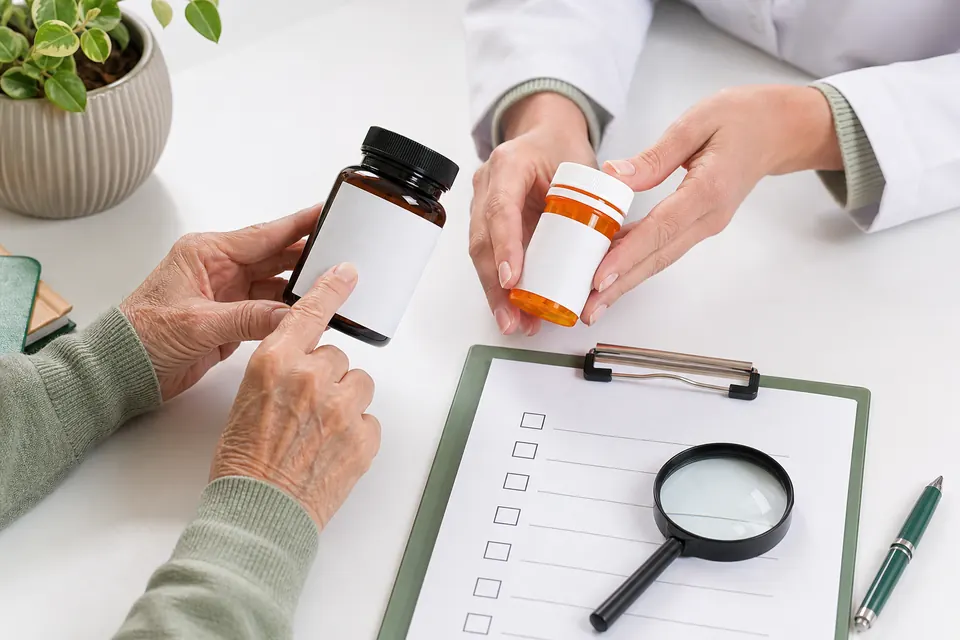
Many NAD-branded products are blends. Resveratrol, curcumin, quercetin, ginkgo, garlic, omega-3 oils, or other botanicals may be present, and a buyer may already take some of them separately. Evidence and clinical relevance differ by ingredient and dose, but combining several products can make an interaction or side effect harder to trace.
Items to include in a bruising review
| Check | Why it matters |
|---|---|
| Prescription anticoagulants or antiplatelet drugs | Bruising or bleeding can be medication-related; the prescriber should guide any change. |
| Aspirin, ibuprofen, naproxen, or other OTC products | Occasional products are easy to omit from a medication list but may affect the interpretation. |
| Steroids, some antidepressants, or recent medication changes | The timing may fit a medicine or combination rather than the NAD ingredient alone. |
| Botanicals, oils, powders, teas, and combination supplements | Multiple overlapping ingredients can matter even when each front label looks unrelated. |
| Dose and serving changes | Two capsules, two scoops, or stacking brands may create a very different exposure from the label headline. |
Do not stop a prescribed blood thinner because a new supplement seems suspicious. Contact the prescriber or pharmacist and ask how to handle both products. If a clinician recommends pausing the supplement, keep the bottle and lot information in case an adverse-event report is appropriate.
When unexplained bruising needs prompt medical attention
A single bruise is usually different from a pattern of spontaneous, large, painful, or rapidly increasing bruises. Contact a healthcare professional when bruises appear without a clear reason, recur frequently, begin after a medicine or supplement change, or come with other bleeding.
Do not wait on these warning signs
- Bleeding that will not stop, black or bloody stools, red or brown urine, vomiting blood, or coughing blood.
- Severe headache, fainting, confusion, weakness on one side, chest pain, or shortness of breath.
- A large or rapidly expanding bruise, major swelling, severe pain, or bruising after a significant fall or head injury.
- Bruising with fever, marked weakness, paleness, unexplained weight loss, swollen glands, or many pinpoint red-purple spots.
- Any unusual bruising while taking an anticoagulant, antiplatelet drug, chemotherapy, or another medicine that requires monitoring.
Use emergency services for severe symptoms. A refund window, supplement experiment, or online review should never delay care for possible bleeding or another urgent problem.
How this safety question changes a supplement comparison
If the safety review finds no urgent concern and you still want to compare products, favor clear ingredient forms, disclosed amounts, lot-specific testing, simple serving directions, and a seller that does not promise to treat fatigue, aging, or disease. A simpler formula is usually easier to evaluate when you are trying to identify what caused a symptom.
Advanced Mitochondrial Formula is not a pure NAD supplement. It is a broad mitochondrial-support formula that includes niacinamide plus several other nutrients and plant-derived ingredients. That makes it a different buying decision from standalone NMN or NR, and it also makes full-label review important if you bruise easily, use medication, or already take overlapping supplements. Nothing in this article establishes that the formula causes bruising.
After the safety questions are resolved, compare the formula for ingredient fit, convenience, current price, guarantee terms, and evidence limits. The affiliate link below is a way to verify the seller's current label and offer, not a recommendation to use the product despite unexplained bruising.
Bottom line: treat a new bruise as a clue, not a verdict
NAD supplements are not currently established as a class-wide direct cause of easy bruising. Still, a new pattern after starting NAD, NMN, NR, niacinamide, or a blended product deserves a real review. Record the timing, check the complete label and dose, include all medicines and supplements, and involve a pharmacist or clinician when bruising is unexplained or recurrent.
The safest conclusion may be that a bump caused the mark, that another ingredient or medicine deserves attention, or that a medical cause needs evaluation. What the available evidence does not support is diagnosing the cause from the word NAD on the front of a bottle.
Frequently asked questions
Can NAD supplements cause bruising?
Bruising is not established as a predictable class-wide side effect of NAD, NMN, or NR supplements. A specific product could still create questions because of dose, other ingredients, medication combinations, or an individual reaction. Unexplained or repeated bruising should be reviewed by a healthcare professional.
Should I stop taking an NAD supplement if I notice bruises?
Do not take extra doses. For new, unexplained, or repeated bruising, contact a pharmacist or clinician for advice about pausing the supplement. Do not stop a prescribed anticoagulant or other medicine without instructions from its prescriber.
Is bruising a known side effect of NMN or NR?
Short human studies have not established easy bruising as an expected effect of NMN or NR. Those studies do not exclude every uncommon event, long-term risk, product-quality issue, or interaction, so the exact product and full medication list still matter.
Which supplement ingredients should I mention to my pharmacist?
Mention every ingredient and product, not only the NAD-related one. Bring the full label for botanicals, omega-3 oils, curcumin, resveratrol, ginkgo, garlic, vitamins, powders, teas, and combination formulas, along with prescriptions and over-the-counter medicines.
When is a bruise an emergency?
Seek urgent help for uncontrolled bleeding, black or bloody stool, blood in urine, severe headache, fainting, confusion, chest pain, shortness of breath, a rapidly expanding bruise, or concerning symptoms after a head injury. When in doubt about severe symptoms, use emergency services.