
Contents
- Quick answer: mitochondria supplement benefits are possible, not guaranteed
- What people mean when they search for mitochondrial supplement benefits
- The evidence ladder: mechanism, human results, and finished products
- Common ingredients: what benefit is being proposed, and what is missing
- What mitochondrial supplement benefits cannot prove
- Before buying, check the person and the label before the benefit claim
- Where Advanced Mitochondrial Formula fits in this discussion
- Bottom line: judge the benefit claim at the same level as the evidence
- Frequently asked questions
Quick answer: mitochondria supplement benefits are possible, not guaranteed
Mitochondria supplement benefits are usually discussed as support for cellular energy metabolism, antioxidant defenses, exercise-related function, or healthy aging. Those are reasonable areas to study, but they are not the same as a guaranteed increase in daily energy, a repair claim, or a treatment for fatigue. The useful question is not whether a label mentions mitochondria. It is what the exact ingredient, dose, product, and human evidence can actually support.
For a generally healthy adult comparing wellness products, a mitochondrial supplement may be one option to evaluate after checking sleep, food, movement, medications, and obvious health concerns. New, severe, persistent, or unexplained fatigue deserves a conversation with a qualified healthcare professional before a supplement trial.
The practical takeaway
- The most defensible benefit is usually ingredient-specific support for a normal biological pathway, not a universal feeling of more energy.
- A change in a biomarker can be interesting without proving better stamina, memory, mobility, or lifespan.
- A finished product needs its own label, dose, quality, safety, and outcome review; studies of separate ingredients do not automatically validate a blend.
- Compare one clear product strategy at a time when possible, so benefits, side effects, and no-change outcomes remain interpretable.
- Affiliate disclosure: MitoEnergy Reviews may earn a commission if you buy Advanced Mitochondrial Formula through some links. The commercial relationship does not change the evidence limits or safety cautions.
What a benefit claim may mean in practice
| Claim language | A careful interpretation | What still needs checking |
|---|---|---|
| Supports cellular energy | The ingredient participates in a pathway related to normal energy metabolism. | Whether the dose and product produce a noticeable outcome for the intended buyer. |
| Antioxidant support | The ingredient is discussed in redox or oxidative-stress research. | Whether a broad antioxidant claim is relevant to the person's actual goal and health context. |
| Supports exercise or recovery | A study may have measured a defined exercise, performance, or recovery endpoint. | The population, training status, dose, and endpoint may not match a general supplement shopper. |
| Healthy aging support | The product is positioned around age-related biology or function. | Healthy aging language does not prove slower aging, disease prevention, or longer life. |
| Repairs mitochondria | Usually a broad marketing phrase that needs careful scrutiny. | No supplement should be treated as a treatment for mitochondrial disease or unexplained fatigue. |
What people mean when they search for mitochondrial supplement benefits
Mitochondria help cells convert nutrients into usable energy, which is why the topic sounds relevant to stamina and healthy aging. But the word benefit can refer to very different outcomes. A researcher may measure a blood marker, a clinician may care about a defined functional test, and a shopper may simply want to feel less tired. Those outcomes should not be treated as interchangeable.
Four levels of outcome to keep separate
| Outcome level | What it can show | What it cannot show by itself |
|---|---|---|
| Biological marker | A measurable change in a pathway, nutrient status, or laboratory marker. | That the person will feel more energetic or function better day to day. |
| Cell or mechanism research | Why an ingredient may be biologically interesting. | That a normal-dose supplement produces the same result in humans. |
| Defined human function | A result in a particular population, dose, study length, and test. | That another brand, dose, combination, or population will have the same result. |
| Subjective energy | How a person reports sleepiness, stamina, or daily energy during a trial. | Whether the supplement caused the change without a controlled comparison. |
This distinction is especially important for broad formulas. Several ingredients may have plausible roles, yet the combination can make it difficult to identify which component matters. A coherent ingredient story is a reason to compare a product, not proof that the finished formula delivers every benefit suggested by its marketing.
The evidence ladder: mechanism, human results, and finished products
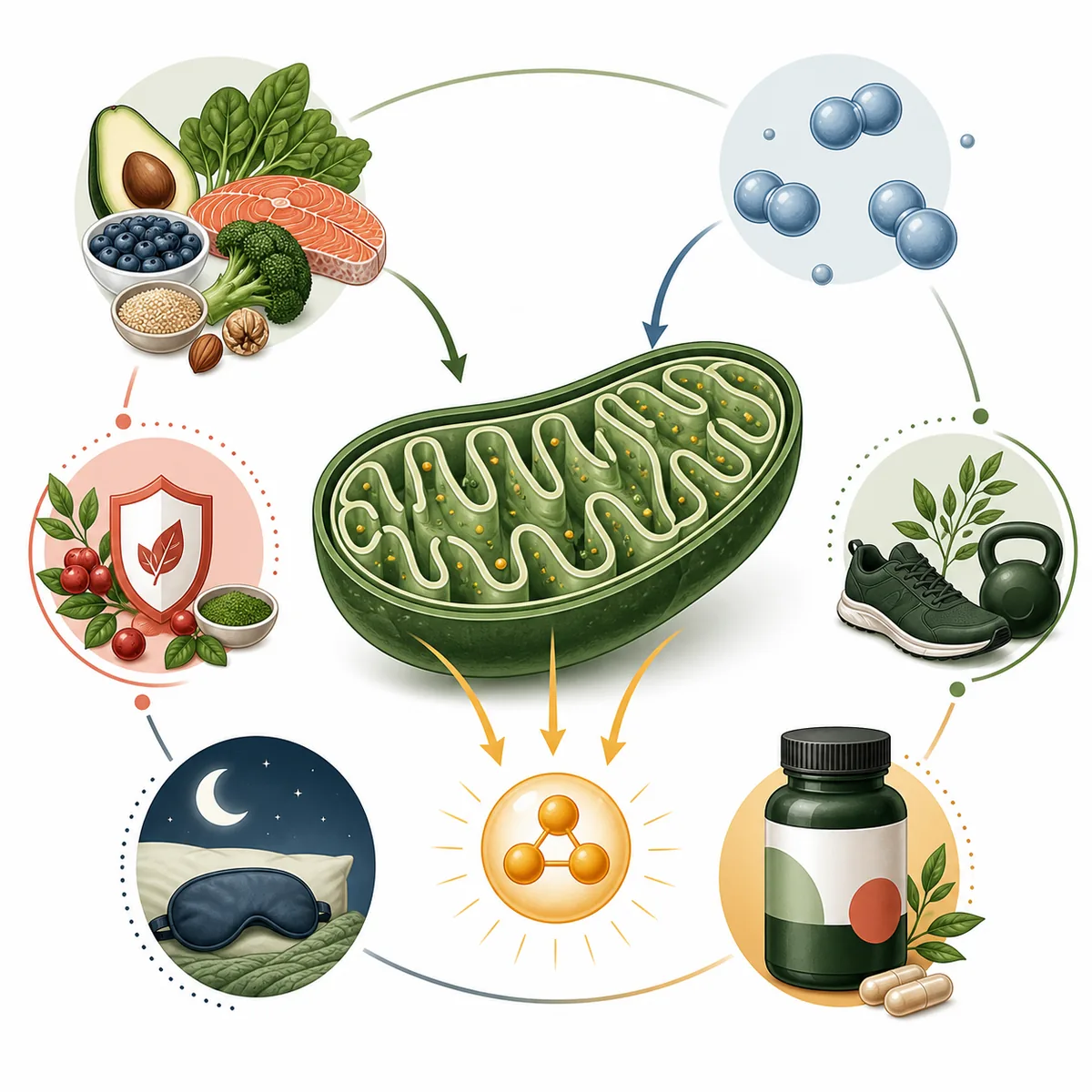
The strongest way to discuss mitochondrial supplement benefits is to grade the evidence instead of using one word such as proven. A mechanism can explain why an ingredient deserves research. A small human study can show a signal under specific conditions. A product-specific trial can tell you more about a particular formula. None of those steps should be skipped when a sales page moves from biology to a broad promise.
A buyer-friendly evidence check
| Evidence level | Useful question | Appropriate conclusion |
|---|---|---|
| Mechanistic or laboratory evidence | Is there a plausible role in energy metabolism, redox balance, or nutrient transport? | The ingredient is worth understanding, but benefit in people remains uncertain. |
| Animal research | Was the result seen in an animal model, at what dose, and for what endpoint? | Interesting preclinical evidence, not a guarantee for human supplement users. |
| Small or short human study | Who participated, what was measured, and was the outcome meaningful? | A limited signal that may justify more research or cautious comparison. |
| Product-specific clinical trial | Was the exact finished product tested at the labeled serving and for the claimed outcome? | More relevant evidence, still not a promise for every person. |
| Testimonials and reviews | Do they describe taste, shipping, tolerance, or the person's experience? | Useful consumer context, not proof of cause, safety, or typical results. |
Common ingredients: what benefit is being proposed, and what is missing
There is no single mitochondrial supplement ingredient. CoQ10, PQQ, acetyl-L-carnitine, B3-related compounds, magnesium, alpha-lipoic acid, and other ingredients are discussed for different reasons. The responsible comparison is ingredient-specific and dose-specific. It also asks whether the human research matches the buyer's age, health context, goal, and product format.
Ingredient-level benefit questions
| Ingredient or group | Why it attracts attention | What a cautious buyer should ask |
|---|---|---|
| CoQ10 or ubiquinol | A cofactor associated with mitochondrial electron transport and redox biology. | Is the form and dose clear, and does the evidence fit the intended outcome rather than a different medical context? |
| PQQ | Often discussed in redox, mitochondrial signaling, and healthy-aging research. | How much human evidence exists for the exact benefit, dose, and finished product? |
| Acetyl-L-carnitine | Related to carnitine biology and fatty-acid transport into mitochondria. | Does the study population resemble the buyer, and are thyroid, seizure, medication, or tolerance questions relevant? |
| NAD, NMN, NR, niacinamide | Connected to NAD-related metabolism and healthy-aging interest. | Which molecule is present, how much is supplied, and is a biomarker being mistaken for a felt benefit? |
| Magnesium | A mineral involved in many enzyme systems and normal cellular processes. | What form and amount are present, and does it overlap with an existing product or kidney-related caution? |
| Alpha-lipoic acid and polyphenols | Often positioned around antioxidant or metabolic pathways. | Could the ingredient affect glucose management, medication exposure, surgery timing, or another supplement? |
This is why a long list should not automatically win a comparison. A single ingredient may offer cleaner observation and easier price math. A broad formula may offer convenience, but every additional active creates another dose, overlap, and interaction question.
What mitochondrial supplement benefits cannot prove
A careful article should also name the conclusions that do not follow. A product may contain ingredients related to ATP, NAD, antioxidant, or fatty-acid pathways and still lack evidence that it repairs damaged mitochondria, reverses aging, prevents disease, or fixes chronic fatigue. Those are materially stronger claims than general wellness support.
Translate strong marketing into answerable questions
| Strong claim | Better question |
|---|---|
| Boosts energy fast | What exact outcome was measured, in whom, at what dose, and for how long? |
| Clinically proven formula | Was the exact finished formula tested, or are the cited studies about separate ingredients? |
| Repairs or renews mitochondria | Is this a general wellness metaphor, or is the seller implying treatment of a disease? |
| Supports healthy aging | Does the evidence concern a marker, a short-term function, or a real long-term outcome? |
| No side effects | What are the ingredient-specific cautions, interactions, and instructions for stopping? |
This claim audit is not anti-supplement. It is a way to keep the product decision proportional to the evidence. The Federal Trade Commission expects health-related advertising claims to have competent and reliable scientific support, and a buyer can use that principle as a practical filter for promises that sound more certain than the research.
Before buying, check the person and the label before the benefit claim
The same product can be a reasonable wellness comparison for one adult and a poor first step for another. A supplement cannot tell you whether low energy comes from sleep, nutrition, medication, mood, a medical condition, or ordinary changes in routine. Start with the person, then the complete label, then the offer terms.
Ask a clinician or pharmacist first when
- Fatigue is new, severe, persistent, worsening, or unexplained, or comes with chest pain, trouble breathing, fainting, confusion, bleeding, fever, or unintentional weight loss.
- You take prescription drugs, especially blood thinners, diabetes medication, blood-pressure or heart medication, thyroid medication, seizure medication, immune-related drugs, or cancer-treatment drugs.
- You have kidney or liver disease, a cancer history, diabetes, a seizure history, an upcoming surgery, or a diagnosed mitochondrial condition.
- You are pregnant, trying to become pregnant, breastfeeding, buying for a child, or buying for a frail older adult.
- You already combine several products containing CoQ10, magnesium, B vitamins, antioxidants, carnitine, curcumin, quercetin, or absorption enhancers.
A simple label and value checklist
| Check | What to look for |
|---|---|
| Ingredient identity | Plain names and specific forms, not only a proprietary blend or a broad pathway label. |
| Amount per serving | A disclosed amount for each active ingredient and a clear serving size. |
| Quality information | Manufacturer details, storage instructions, lot information, and meaningful testing information. |
| Overlap and interactions | A list you can bring to a pharmacist, including prescriptions, over-the-counter medicines, and other supplements. |
| Cost and exit plan | Price per serving, shipping, subscription terms, bundle conditions, and an easy-to-find refund process. |
Where Advanced Mitochondrial Formula fits in this discussion
Advanced Mitochondrial Formula fits this article as a broad mitochondrial-support option, not as proof that every proposed benefit will occur. Its ingredient strategy is designed around several categories people commonly compare, including NAD-related metabolism, ATP-related support, CoQ10, PQQ, acetyl-L-carnitine, antioxidant compounds, magnesium, and absorption support. That breadth may be convenient, but it also means the full label and overlap deserve more attention than a single-ingredient purchase.
When a broad formula may or may not fit
| May be worth comparing when | Pause or choose a narrower route when |
|---|---|
| You want one combined formula rather than several separate bottles. | You want to isolate one ingredient or identify exactly what changes your response. |
| You are comfortable reading a multi-ingredient label and keeping expectations modest. | You already take overlapping B vitamins, CoQ10, magnesium, antioxidants, carnitine, or other energy products. |
| The current official offer, price, guarantee, and full ingredient list fit your budget and safety context. | You are using a refund guarantee to justify a large bundle before checking the label or asking a clinician. |
| You are comparing general wellness support, not trying to treat unexplained fatigue or a diagnosed condition. | The product is being considered as a substitute for medical evaluation or prescribed care. |
The independent buying sequence is review first, ingredient list second, safety and overlap third, price and guarantee fourth, and official checkout verification last. If the product remains a fit after that process, the official offer is available below.
Bottom line: judge the benefit claim at the same level as the evidence
Mitochondria supplement benefits are plausible in the narrow sense that many ingredients have roles in normal energy, redox, nutrient, or mitochondrial pathways. The practical benefit for a particular person is a separate question. It depends on the ingredient, dose, product quality, health context, baseline routine, and outcome being measured.
For most readers, the best next step is not to find the most dramatic claim. It is to decide whether the goal is a documented nutrient gap, a focused ingredient comparison, or a broad convenience formula. Then check safety, read the full label, and keep the purchase proportional to the uncertainty.
Frequently asked questions
Do mitochondrial supplements really provide benefits?
Some ingredients have plausible biological roles or limited human research for specific outcomes, but results vary by ingredient, dose, product, and person. A mitochondrial supplement should not be treated as a guaranteed energy fix or a treatment for fatigue.
What is the best ingredient for mitochondrial support?
There is no universal best ingredient. CoQ10, PQQ, acetyl-L-carnitine, B3-related compounds, magnesium, and other ingredients have different rationales and evidence limits. The best comparison depends on the buyer's goal, label, medications, health history, and preference for a focused or broad formula.
Can a supplement repair damaged mitochondria?
No. A product may be marketed around mitochondrial support, but that does not prove it repairs damaged mitochondria, treats mitochondrial disease, reverses aging, or fixes unexplained fatigue. Those concerns deserve professional medical guidance.
Are mitochondrial supplement benefits the same as feeling more energetic?
No. A study may measure a nutrient level, biomarker, or defined performance test, while a shopper may mean less tiredness in daily life. Those outcomes are related only if the research directly connects them, so do not assume one proves the other.
Is Advanced Mitochondrial Formula a mitochondrial supplement?
Yes. It is positioned as a broad, multi-ingredient mitochondrial-support formula rather than a pure CoQ10, NAD, NMN, or NR product. Review the complete current label, safety fit, price, and guarantee before deciding, and do not treat it as a guaranteed treatment.
Sources and further reading
- NIH Office of Dietary Supplements: Dietary Supplements, What You Need to Know
- NCCIH: Coenzyme Q10
- PubMed: Review of PQQ effects on brain function and physiological processes
- FDA: FDA 101 - Dietary Supplements
- FTC: Health Products Compliance Guidance
- Advanced BioNutritionals official Advanced Mitochondrial Formula offer page