
Contents
- Quick answer: mitochondria matter, but they are not a fat-burning switch
- Fat burning, fat oxidation, and metabolism are not the same claim
- How mitochondria use fuel during everyday activity
- What can support metabolism without a miracle claim
- Where mitochondrial support supplements fit
- How to evaluate a metabolism or mitochondrial supplement
- When metabolism and fatigue questions need a clinician first
- A simple way to test the question without chasing a dramatic result
- Bottom line: support the system, then judge the claim
-
Frequently asked questions
- Do mitochondria burn fat?
- How can I improve mitochondria for faster fat burning?
- Does more fat oxidation during exercise mean more weight loss?
- Which supplements are often discussed for mitochondrial metabolism?
- Is Advanced Mitochondrial Formula a fat-burning supplement?
- When should fatigue be evaluated before trying a supplement?
Quick answer: mitochondria matter, but they are not a fat-burning switch
Mitochondria help cells turn fuel from food into usable energy, so they are relevant to metabolism and exercise. But the phrase faster fat burning can mean several different things. A muscle may oxidize more fat during a particular walk, while a person's total body-fat change still depends on the whole pattern of food intake, activity, sleep, body composition, and time. More fat oxidation in one moment is not the same as guaranteed weight loss.
For adults over 40, the realistic goal is to support a sustainable routine that includes movement, strength work, adequate food and protein, sleep, and recovery. Those habits can influence fitness and metabolic health without proving that a supplement has repaired mitochondria or accelerated fat loss. Persistent or unexplained fatigue should be checked before it becomes a supplement-shopping problem.
The practical takeaway
- Mitochondria use both carbohydrate and fat-derived fuel; the mix changes with exercise intensity, duration, recent meals, and training status.
- Fat oxidation during a workout is not a direct scorecard for total fat loss or metabolic health.
- Regular aerobic movement and resistance training are more defensible starting points than a product promising to switch on fat burning.
- A varied diet, adequate protein, hydration, and sleep support the routine that makes activity possible.
- Supplement claims should be judged by the exact ingredient, dose, finished product, safety context, and cost per serving.
What this guide can and cannot promise
| Reasonable question | Useful answer | Claim to avoid |
|---|---|---|
| Can mitochondria use fat as fuel? | Yes. Fatty acids can be processed through mitochondrial energy pathways, especially during lower-intensity or longer-duration activity. | A product can force the body to burn fat or repair mitochondria on demand. |
| Can exercise support metabolism? | A consistent routine can improve fitness and make healthy movement more sustainable. | One workout or supplement guarantees faster metabolism. |
| Can a supplement help? | Some ingredients have plausible roles or limited human research that may justify careful comparison. | A pathway explanation proves weight loss, disease treatment, or a predictable energy boost. |
Fat burning, fat oxidation, and metabolism are not the same claim
Search results often use fat burning as shorthand for weight loss, increased calorie expenditure, improved insulin sensitivity, or better endurance. Those outcomes are related but not interchangeable. Fat oxidation describes the use of fatty acids as a fuel source at a given time. Energy expenditure describes how much energy the body uses. Body-fat change reflects the longer-term balance of energy intake, expenditure, storage, activity, and individual physiology.
Translate the wording before you buy
| Phrase you may see | What it may describe | What it does not establish |
|---|---|---|
| Burns fat | A claim about fuel use, thermogenesis, appetite, or marketing positioning. | That the product reduces body fat in a controlled human study. |
| Boosts metabolism | A broad suggestion about energy expenditure or cellular energy pathways. | A measurable, meaningful, and lasting change for every buyer. |
| Supports mitochondrial function | A general wellness claim connected to energy metabolism or redox biology. | A diagnosis, repair of mitochondrial disease, or treatment for fatigue. |
| Improves fat oxidation | A change in the fuel mix measured during a specific test or exercise condition. | Automatic weight loss without considering overall energy balance. |
This distinction is especially important for adults who see a supplement advertisement after noticing a larger waist, lower exercise tolerance, or afternoon fatigue. Those experiences can have many explanations. A label that mentions mitochondria may be relevant to a wellness comparison, but it should not replace an assessment of diet, activity, sleep, medications, and health conditions.
How mitochondria use fuel during everyday activity
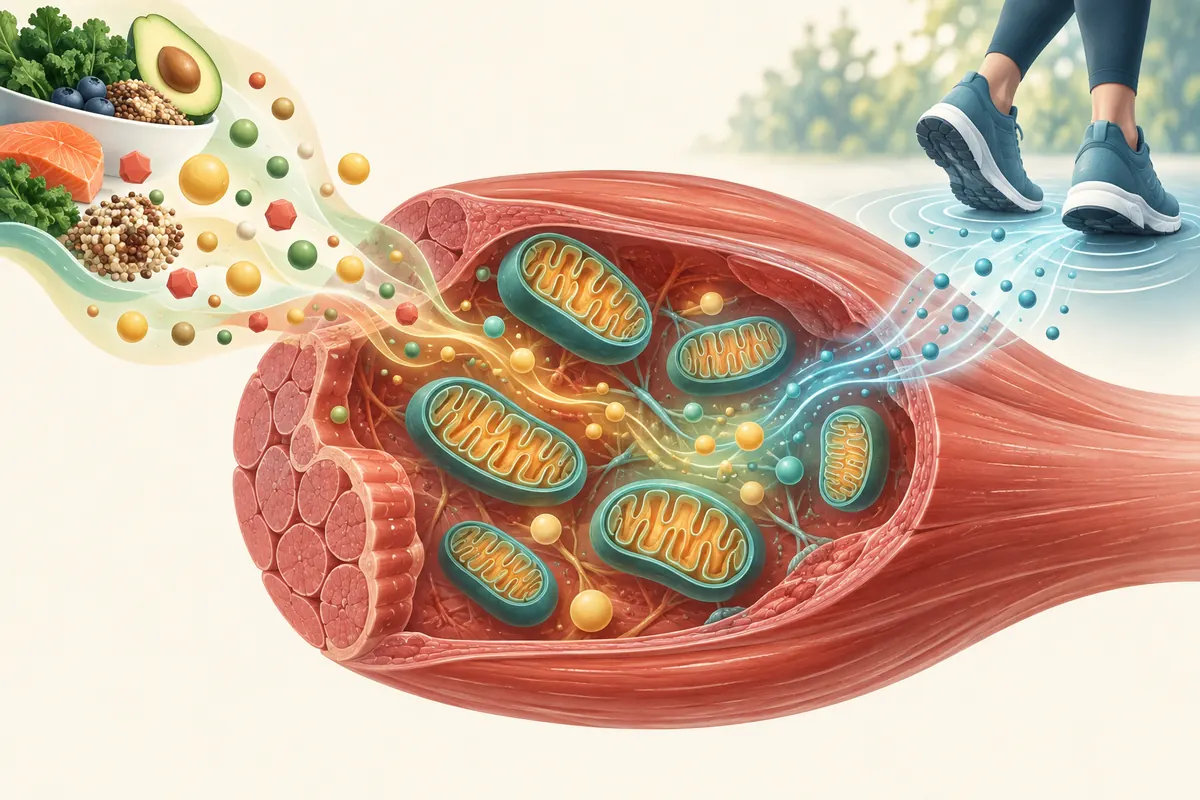
Mitochondria are structures inside many cells that help convert energy from carbohydrates, fats, and other fuel sources into ATP, the molecule cells use for many tasks. Skeletal muscle has a high energy demand, which is why walking, climbing stairs, and resistance training make mitochondrial metabolism relevant to everyday function. The biology is real, but the consumer conclusion still depends on the outcome being measured.
At lower exercise intensities and during longer activity, a greater proportion of energy may come from fat oxidation than during short, hard efforts. That does not mean a person should avoid carbohydrate, train fasted, or chase a supplement to maximize a single fuel percentage. Muscles use a flexible mix of fuels, and performance, recovery, total activity, and consistency usually matter more than one metabolic snapshot.
A better way to read metabolism claims
| Evidence question | Why it matters |
|---|---|
| What was measured? | A breath test, blood marker, resting metabolic rate, exercise output, body composition, or a daily-life outcome answer different questions. |
| In whom? | Results in trained athletes, sedentary adults, people with a deficiency, and adults with a medical condition should not be blended casually. |
| For how long? | A short laboratory response cannot automatically prove a lasting change in body composition or energy. |
| Was the finished product tested? | An ingredient study does not prove that a multi-ingredient formula produces the same result at the labeled amount. |
What can support metabolism without a miracle claim
The most useful way to support mitochondrial metabolism is to make the inputs that influence daily activity more reliable. This is not a promise to increase mitochondria or accelerate weight loss. It is a practical order of operations for people who want to know whether a supplement adds anything beyond the basics.
Foundations worth checking first
- Movement: accumulate regular walking or another aerobic activity you can repeat, then add strength work suited to your current ability.
- Food: build meals around adequate protein, vegetables and fruit, fiber-rich carbohydrates, and fats that fit your preferences and health needs.
- Hydration: check fluids and meal timing when heat, exercise, alcohol, or long gaps between meals make energy feel worse.
- Sleep: treat short or disrupted sleep as part of the energy and appetite question, not as a problem a capsule must hide.
- Recovery: increase training gradually and allow rest, especially when returning to activity after illness or a long break.
Turn a broad goal into a trackable question
| Broad goal | More useful question |
|---|---|
| Faster metabolism | Can I walk, climb stairs, or train consistently with less disruption? |
| More fat burning | Is my eating and movement routine sustainable over several weeks? |
| Better mitochondrial energy | Are sleep, hydration, strength, aerobic activity, and meal quality improving? |
| A supplement result | What exact outcome, time window, and safety boundary would justify continuing? |
Adults over 40 do not need a perfect routine before asking about supplements. The point is to identify the biggest controllable gap. If meals are irregular, sleep is short, and activity is near zero, a complex formula can make the decision harder to interpret. If the foundations are reasonably stable, a transparent product comparison may be easier to evaluate.
Where mitochondrial support supplements fit
A supplement may be worth researching when you have a defined goal, a readable label, and a reason to test one product at a time. Common categories include CoQ10, PQQ, acetyl-L-carnitine, alpha-lipoic acid, D-ribose, magnesium, niacinamide, and NAD-related precursors. Each has a different evidence trail, amount, safety profile, and level of finished-product proof.

Ingredient category versus realistic buyer question
| Category | Reasonable question | Limit to keep in view |
|---|---|---|
| CoQ10 | Is a simpler mitochondrial cofactor approach easier to dose and evaluate? | A plausible role does not make every CoQ10 product or energy claim clinically proven. |
| PQQ | Does the label state the amount and is the human evidence relevant to my goal? | Cell or signaling language is not the same as proven fat loss or mitochondrial growth in daily life. |
| Acetyl-L-carnitine | Is the exact carnitine form clear, and does it fit the reason I am considering it? | Research on one carnitine form or population does not automatically validate another product. |
| Alpha-lipoic acid | Are glucose, thyroid, thiamine, and medication questions relevant? | Its biochemical role does not prove a predictable boost in everyday energy or fat burning. |
| D-ribose | Is the serving amount clear, and are blood-sugar concerns addressed? | ATP-related biology is not proof that extra D-ribose improves metabolism for everyone. |
| NAD-related ingredients | Is the bottle using direct NAD+, NMN, NR, niacinamide, or a blend? | NAD pathway interest does not prove weight loss, age reversal, or a finished-product result. |
| Broad formula | Does combining several categories provide useful convenience at a transparent cost? | More ingredients create more overlap, interaction questions, and difficulty attributing an effect. |
For a broader overview, see the guide to mitochondrial support supplements and its evidence, label, and safety checklist. The term mitochondrial support describes a wellness category; it is not a diagnosis and does not mean that a product can repair a medical condition.
How to evaluate a metabolism or mitochondrial supplement
A good buyer process should make a product easier to say no to. Start with the Supplement Facts panel, then check the serving size, exact forms, third-party testing, lot traceability, allergens, storage, seller terms, and price per serving. Only after those details are clear should you compare testimonials or a bold fat-burning story.
Label and offer checks
- Identify every active ingredient and amount per serving; do not treat a proprietary blend as a complete dose disclosure.
- Calculate the real daily cost from servings per container, not only the front-page bottle price.
- Look for batch or lot-specific identity and quality information rather than a generic badge or an unverified laboratory phrase.
- Check whether the product was studied as a finished formula or whether the page is borrowing evidence from separate ingredients.
- Read the return window, subscription terms, shipping, and current checkout total before choosing a bundle.
- Do not use a supplement as a reason to delay evaluation of new, severe, persistent, or unexplained fatigue.
A fair way to compare a broad formula
| Potential advantage | Question that keeps it honest |
|---|---|
| Convenience | Would one combined bottle actually replace products I would otherwise buy, and are the doses transparent? |
| Ingredient breadth | Am I comfortable with the added interaction and overlap questions created by several actives? |
| Mitochondrial positioning | Is the claim about normal cellular energy support, or is it implying treatment, repair, or guaranteed fat loss? |
| Guarantee | Does the refund policy reduce purchase risk without being mistaken for proof that the product works? |
Advanced Mitochondrial Formula is one example of the broad-formula strategy. The offer is positioned around ingredients such as niacinamide, D-ribose, PQQ, CoQ10, acetyl-L-carnitine, alpha-lipoic acid, plant compounds, and magnesium. That may appeal to someone who prefers a combined mitochondrial-support product, but it is not a dedicated fat-burning treatment, and the presence of several pathway-related ingredients does not prove a finished-product weight-loss result.
Disclosure: MitoEnergy Reviews may earn a commission if you buy Advanced Mitochondrial Formula through the official-offer link below, at no extra cost to you. The affiliate relationship does not change the evidence limits, the need to check the current label, or the recommendation to involve a qualified healthcare professional when the health context is complex.
When metabolism and fatigue questions need a clinician first
A new interest in fat burning can start with a symptom: lower stamina, breathlessness, sleepiness, an unexpected body-composition change, or fatigue that makes ordinary tasks harder. Do not assume that symptom is a mitochondrial problem. Medication effects, sleep disorders, anemia, thyroid conditions, mood, infection, nutrition, and many other issues can affect energy and metabolism.
Ask a qualified healthcare professional before starting if you
- have new, severe, persistent, or unexplained fatigue, exercise intolerance, fainting, chest symptoms, or shortness of breath.
- take prescription medicines, blood thinners, diabetes or blood-pressure medicines, thyroid treatment, seizure medicines, or several supplements.
- are pregnant or breastfeeding, preparing for surgery, or managing kidney, liver, heart, bleeding, or blood-sugar concerns.
- have a cancer history, active treatment, or a diagnosed metabolic or mitochondrial condition.
- are considering a high-dose, multi-ingredient stack or want to combine several products with overlapping ingredients.
Stop treating a supplement as a self-test and seek prompt medical care for severe or rapidly worsening symptoms, chest pain, trouble breathing, fainting, confusion, or signs of a serious allergic reaction. A metabolism article can help you ask better questions; it cannot identify the cause of a symptom.
A simple way to test the question without chasing a dramatic result
If a clinician has not identified a reason to avoid a supplement and your goal is general wellness, keep the experiment modest. Pick one clearly labeled change, keep the rest of the routine reasonably stable, and decide in advance what you will observe. This makes it less likely that a new product, a new workout plan, a diet change, and a sleep disruption will all get credited to one another.
Track the context, not just the scale
- Sleep duration and how rested you feel in the morning.
- Walking or exercise sessions completed and how hard they felt.
- Meal regularity, hydration, and any digestive or appetite changes.
- Afternoon energy, concentration, and ability to complete ordinary activities.
- Any new symptom, medication change, or supplement overlap that changes the safety picture.
What a useful result looks like
| Signal | Cautious interpretation |
|---|---|
| The routine is easier to repeat | That is a practical benefit, but it does not identify which cellular pathway changed. |
| A symptom worsens | Review the full label and contact a healthcare professional rather than adding another product. |
| Nothing noticeable happens | Lack of a noticeable effect is useful information; it is not a reason to double the amount without advice. |
| Body weight changes | Consider the whole food, activity, sleep, and time pattern rather than assigning the change to mitochondria alone. |
Bottom line: support the system, then judge the claim
Mitochondria are part of how cells process fuel, and fat oxidation is a real part of metabolism. The realistic conclusion is narrower than most fat-burning advertisements: regular movement, strength training, adequate nutrition, sleep, and recovery can support a healthier routine, while a supplement may or may not add a measurable benefit depending on its ingredients, dose, product quality, and the person using it.
Choose the question before the product. If the goal is better daily function, track daily function. If the goal is body composition, look at the whole routine over time. If the goal is a mitochondrial supplement, verify the label, safety context, price, and evidence instead of treating the phrase faster fat burning as proof.
Frequently asked questions
Do mitochondria burn fat?
Mitochondria help cells process fuel, including fatty acids, to make usable energy. That does not mean a supplement can switch on fat burning or guarantee weight loss. Fat oxidation during a particular activity is only one part of a longer-term body-composition and metabolic picture.
How can I improve mitochondria for faster fat burning?
A cautious starting point is regular aerobic movement, strength training suited to your ability, adequate food and protein, sleep, hydration, and recovery. These habits support a sustainable routine; they do not prove that mitochondria have been repaired or that fat loss will occur at a guaranteed rate.
Does more fat oxidation during exercise mean more weight loss?
No. The fuel mix used during one workout does not directly determine total body-fat change. Longer-term results depend on the overall pattern of food intake, activity, energy expenditure, body composition, and individual physiology.
Which supplements are often discussed for mitochondrial metabolism?
Common categories include CoQ10, PQQ, acetyl-L-carnitine, alpha-lipoic acid, D-ribose, magnesium, niacinamide, and NAD-related ingredients. Each needs its own evidence, amount, interaction, and finished-product review; none should be treated as a guaranteed fat-burning treatment.
Is Advanced Mitochondrial Formula a fat-burning supplement?
It is positioned as a broader mitochondrial-support formula, not as a clinically established fat-burning treatment. Its ingredients are discussed around cellular energy and related pathways, but that does not prove weight loss or a predictable metabolism change. Check the current label and offer terms before buying.
When should fatigue be evaluated before trying a supplement?
New, severe, persistent, or unexplained fatigue, shortness of breath, chest symptoms, fainting, major exercise intolerance, medication changes, pregnancy, chronic disease, cancer history, kidney or liver disease, and upcoming surgery all justify speaking with a qualified healthcare professional first.
Sources and further reading
- NCBI Bookshelf: Biochemistry, Fatty Acid Oxidation
- U.S. Department of Health and Human Services: Physical Activity Guidelines for Americans
- Dietary Guidelines for Americans
- NIH Office of Dietary Supplements: Dietary Supplements - What You Need to Know
- FDA: Label Claims for Conventional Foods and Dietary Supplements
- FTC: Health Products Compliance Guidance